Article
I don’t normally write much mindset content, simply because it can come across as preachy but today I felt inspired to share 3 mindset frameworks I’ve used on myself and with clients to navigate challenging times.
If life sucks for you right now, I hope you’ll get some value from today’s email.
First thing, is to accept if you are going through a challenging phase.
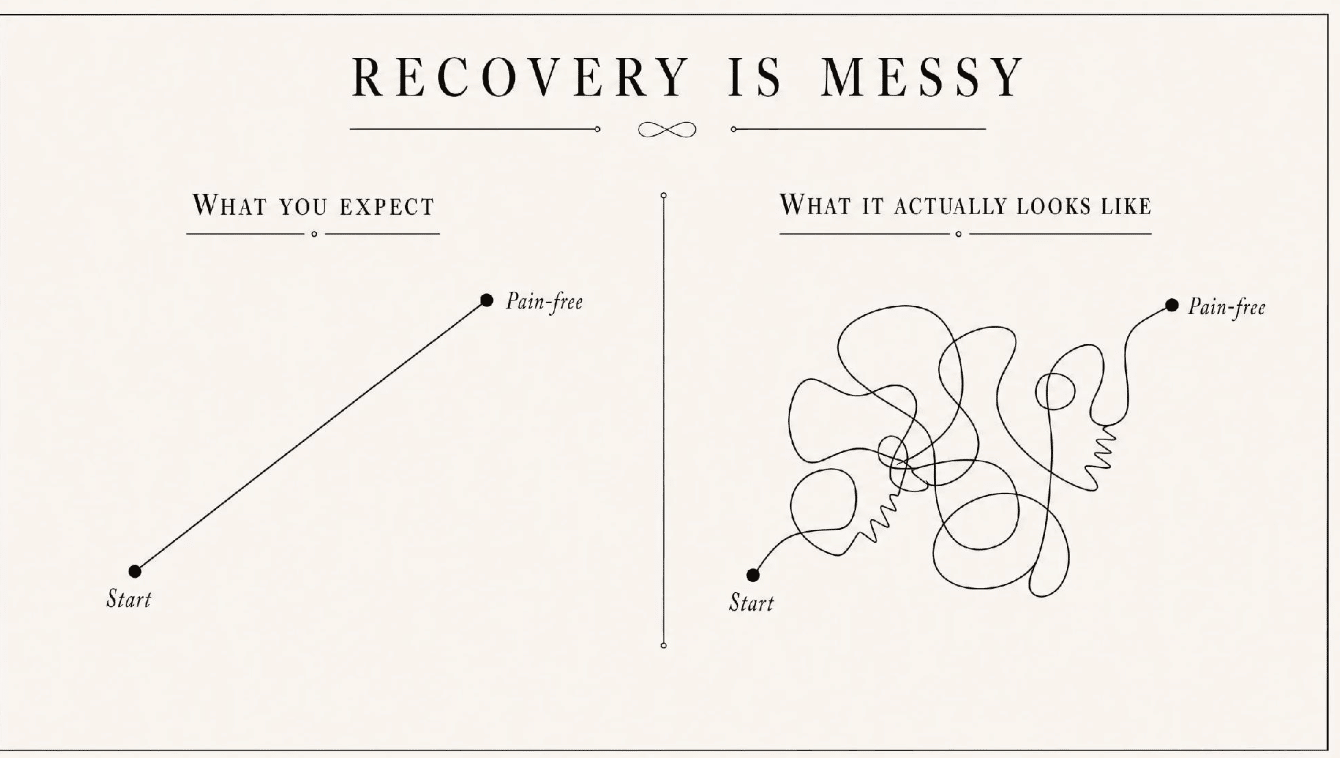
But I don’t want you taking that as a reason your situation can’t improve. It’s hard, and it can still get better. Both of those can be true at the same time.
1. Your language and your beliefs
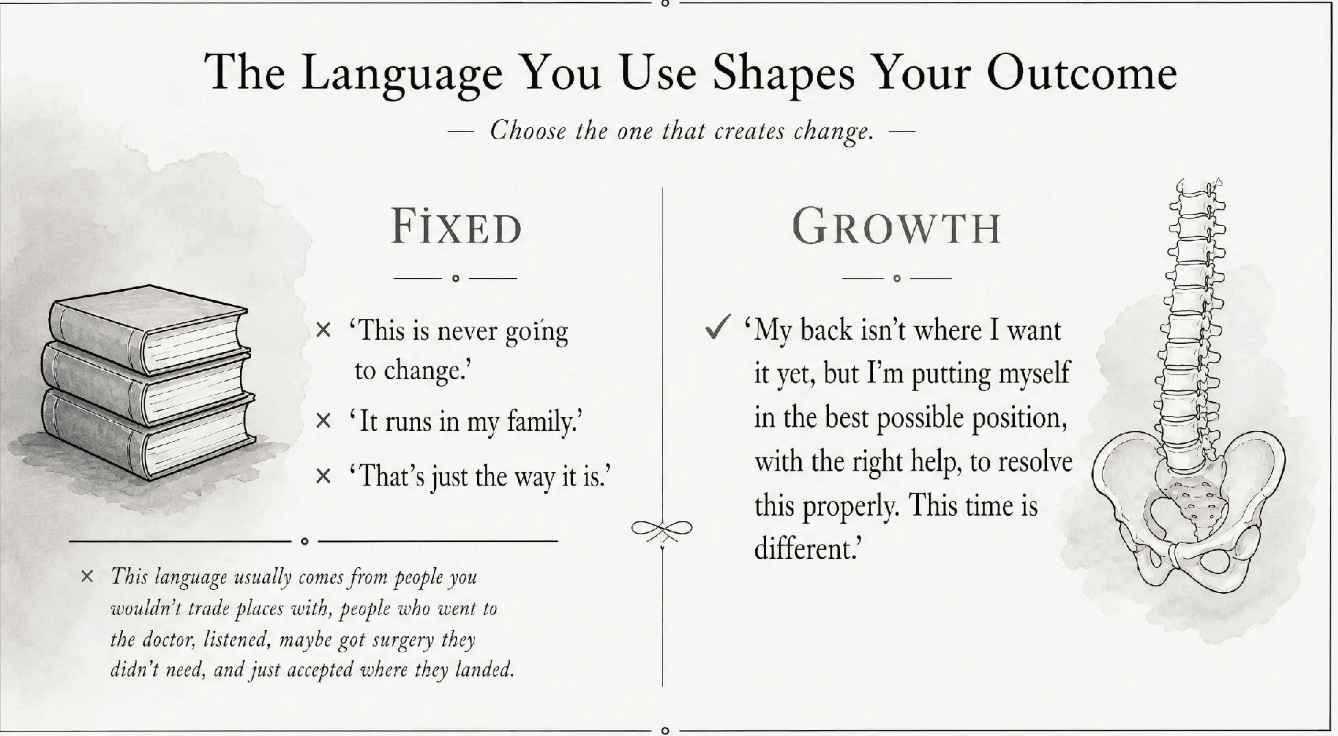
There’s fixed thinking and there’s growth thinking.
Fixed sounds like: “This is part of ageing.” “It’s wear and tear.” “It’s in my family.”
Growth sounds like: “My back pain is tough right now, but I’m doing everything I can to get the support I need to change the trajectory of my outcome.”
That second version is you taking ownership of the situation, and getting resourceful about what you actually need to do next. It’s not pretending things are fine. It’s refusing to hand the outcome over to a sentence you’ve decided is permanent.
2. The Rule of Five
I first heard this from the strength coach Dan John. Out of every 5 workouts, he says, 3 will be average, 1 will be epic, and 1 will suck.
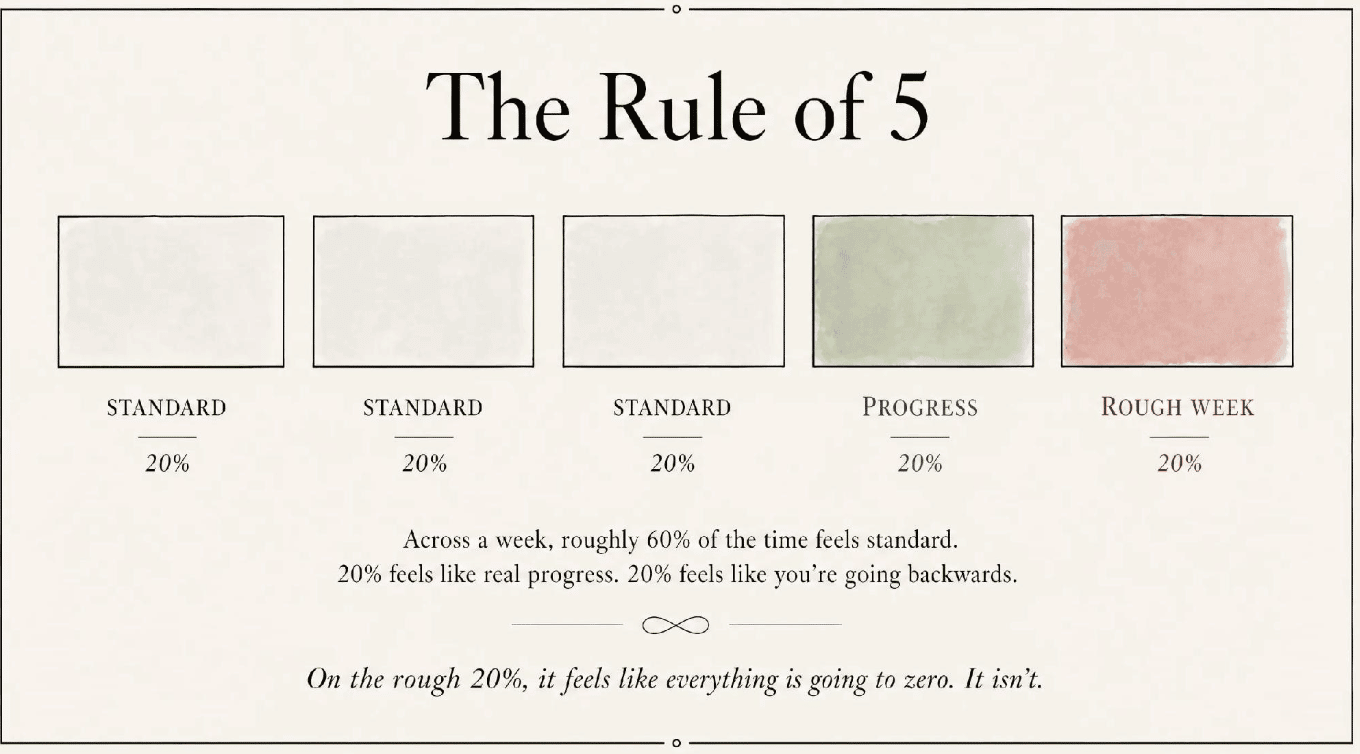
Put simply, 20% of the time, you’re going to feel like you’re failing, like you’re going backwards, like none of it is working.
This is one of the most important things to remember while you’re rehabbing a back injury. You make headway, you get some momentum, you even start to feel better. Then, wham, another flare-up, and you immediately believe you’ve gone right back to zero.
Being able to accept these bumps is one of the hardest parts of injury rehab. It’s also essential for long term recovery. Over time, the bumps hit less hard, because your response to them changes.
I see the same pattern in my business. This year is my tenth year running it, and it’s been one of the toughest, because of changes I chose to make. New directions bring growth, uncertainty and turbulence, all at once. When I’m genuinely struggling with it, I remind myself it’s a signal worth listening to, but it’s also just part of the 20% that’s supposed to suck. That keeps me grounded.
3. Dealing with your inner critic
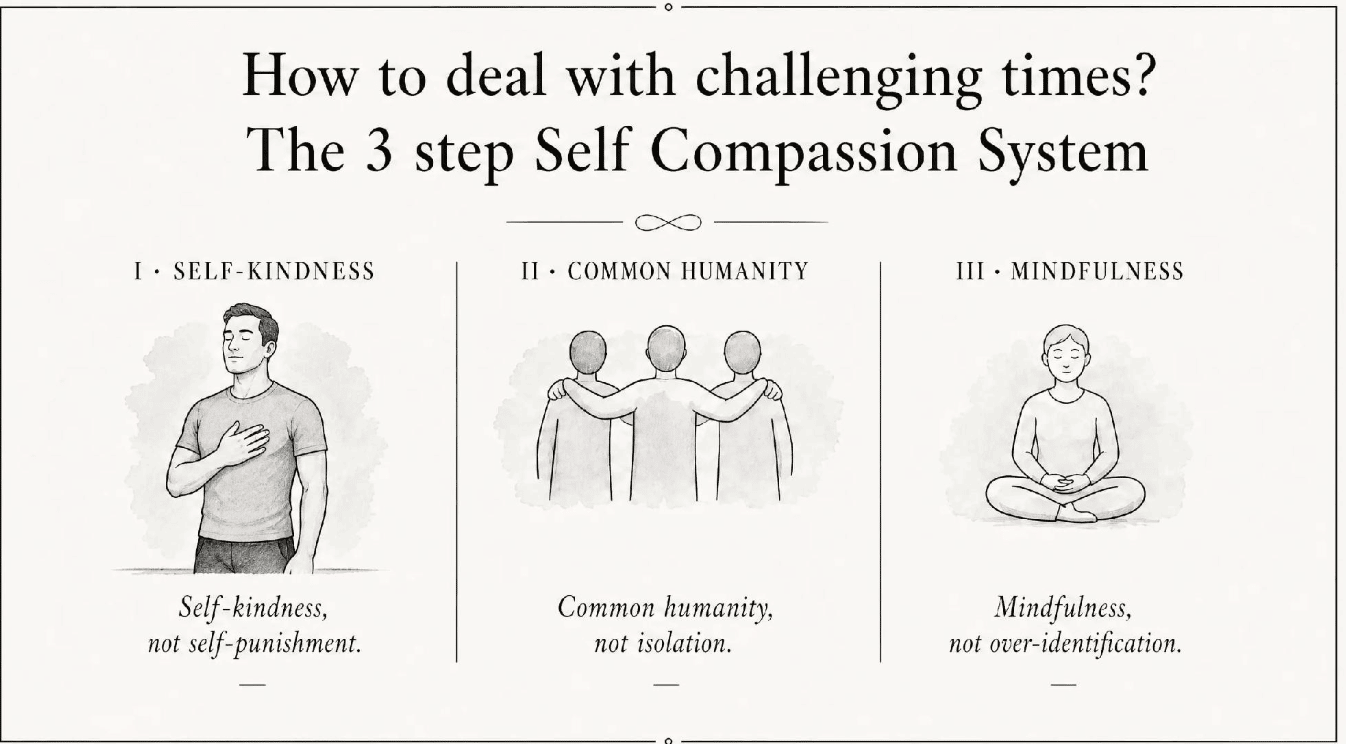
This is a three-step framework I lean on when I start berating myself. Maybe I’m frustrated my body keeps picking up injuries. Maybe the business isn’t where I think it should be by now.
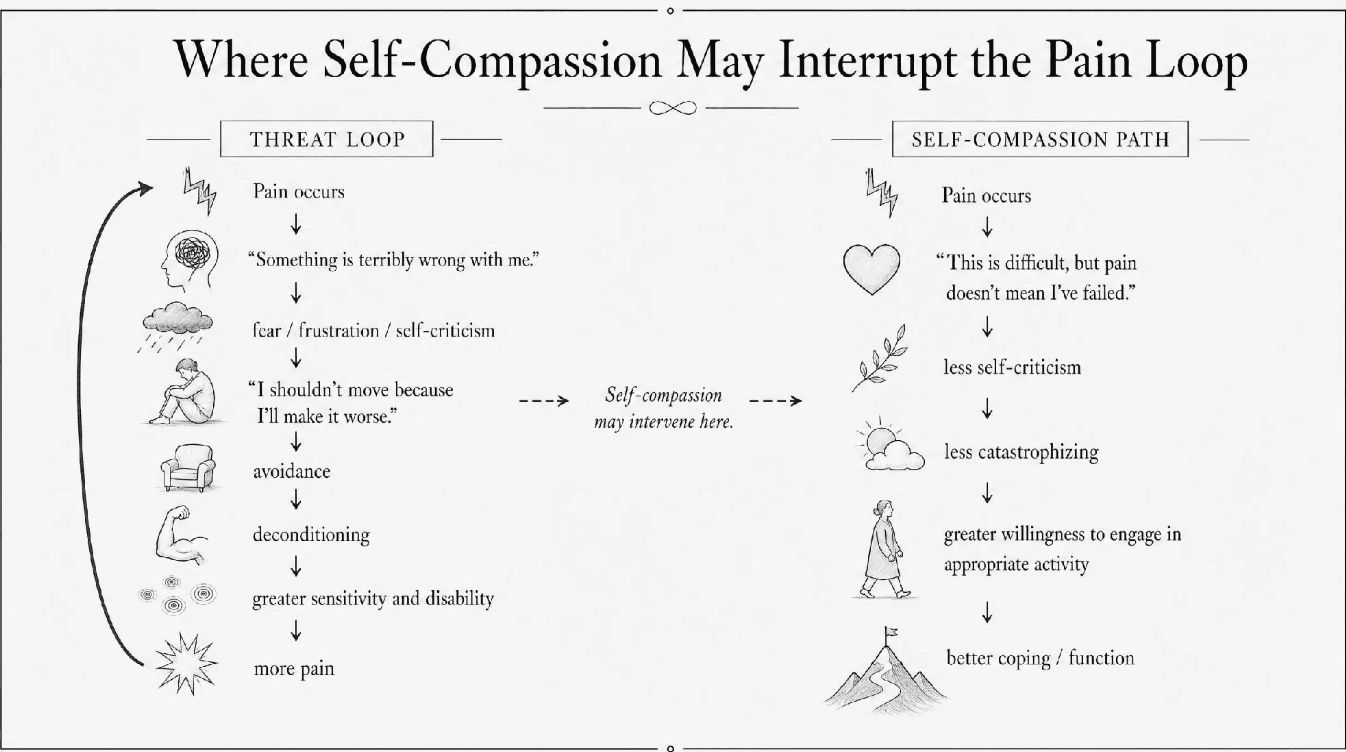
Self-compassion can sound fluffy, airy fairy even. But once you understand it, you’ll feel the benefits.
1.Self-kindness: Speak to yourself the way you’d speak to a friend, not an enemy.
2. Common humanity: There are roughly 600 million people dealing with back pain right now. It’s okay to not have this figured out yet.
3. Mindfulness, not over-identification: In the middle of a rough patch, it’s easy to believe “everything’s ruined, nothing is working.” Instead, try asking what’s actually happening. “This seems to be a 20% dip, right now. What’s here to learn, so I can course correct and avoid it next time?”
One interesting thing about practising self-compassion is overtime, it can change your actions during hard times. It doesn’t just change how the setback feels in the moment. It changes how you respond afterwards, and that’s usually what stops the same pattern repeating.
All of your options are hard when life sucks. Applying these frameworks will be hard but staying stuck is hard as well.
The good news is, you get to choose which hard you want to endure.
One question for you this week
What point resonated with you from today’s post?
Hit reply and tell me.
Conor
P.S. if you want help rehabbing your back pain between now and end of year, book in a call here to see if I can help you.
Originally published on Substack.
Get new posts by email.
Published on Substack. No spam, unsubscribe any time.