Article
My client Niall had been in the boom-bust cycle for years before we started working together.
Every time he’d get a bit better, his physio would tell him to return to activity and do what felt okay but with very little explanation. So he’d go back to running, back to the gym, and he’d flare up again. The frustrating part wasn’t the pain, it was that nobody ever showed him why it kept happening, or what to actually do differently.
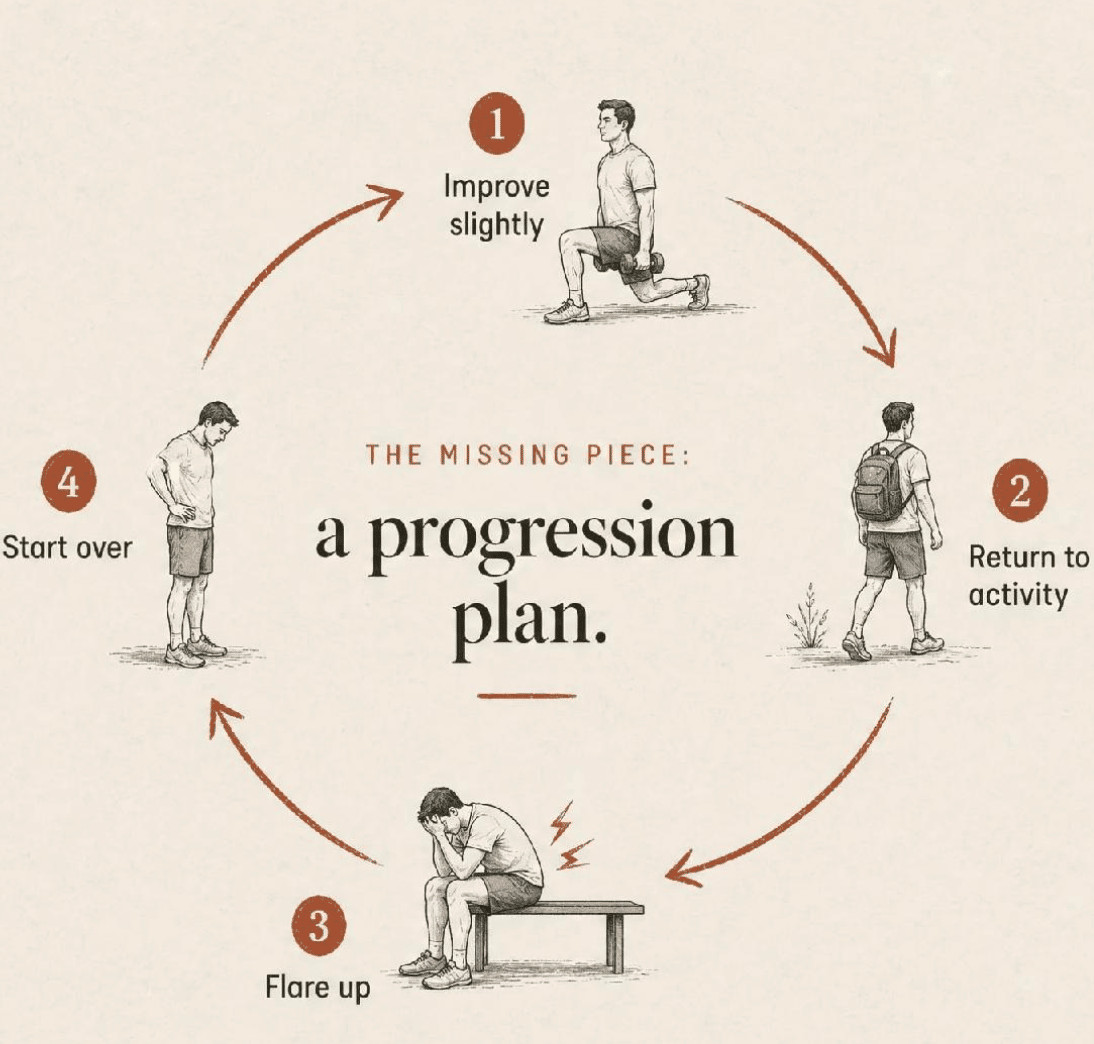
This is one of the most common issues I see with clients who are stuck in this re-injury cycle. And when I first started coaching, I struggled a lot to help clients get out of this cycle too.
Most of my clients were carrying injuries and limitations mainly with knees, low backs, shoulders and they struggled with basic movements like squatting, deadlifting, and pressing without compensating. After a few frustrating years of not getting them the results I wanted, I built a warm-up system around the movement patterns they actually needed.
Every session started with variations of squatting, hinging, pushing, pulling, and core work, but also movements that directly strengthened the areas where they had deficits. Easy enough to do as a warmup but specific enough to actually fix their underlying issues.
Then one day it hit me.
I wasn’t doing different programming depending on whether someone was injured or not. I was doing the same movement pattern but at a different intensity depending on what they were dealing with. That warm-up system wasn’t separate from training. It was training.
The divide between rehab and training isn’t real and I’ll show you using a ladder analogy.
With exercise we have 5 main movement patterns that cover all the basic human movements like squats, hinges (deadlifts), pushes, pulls and core work.
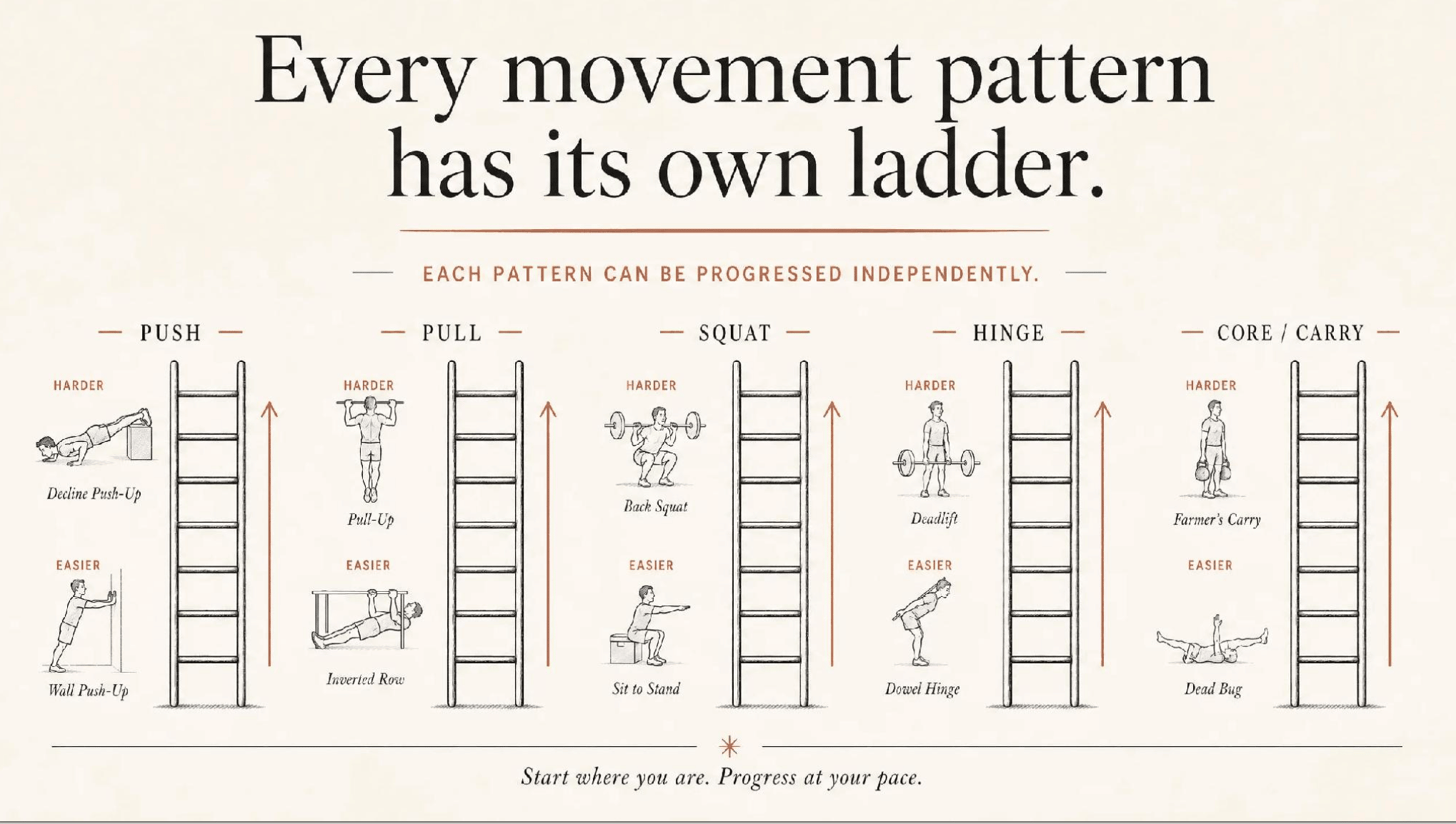
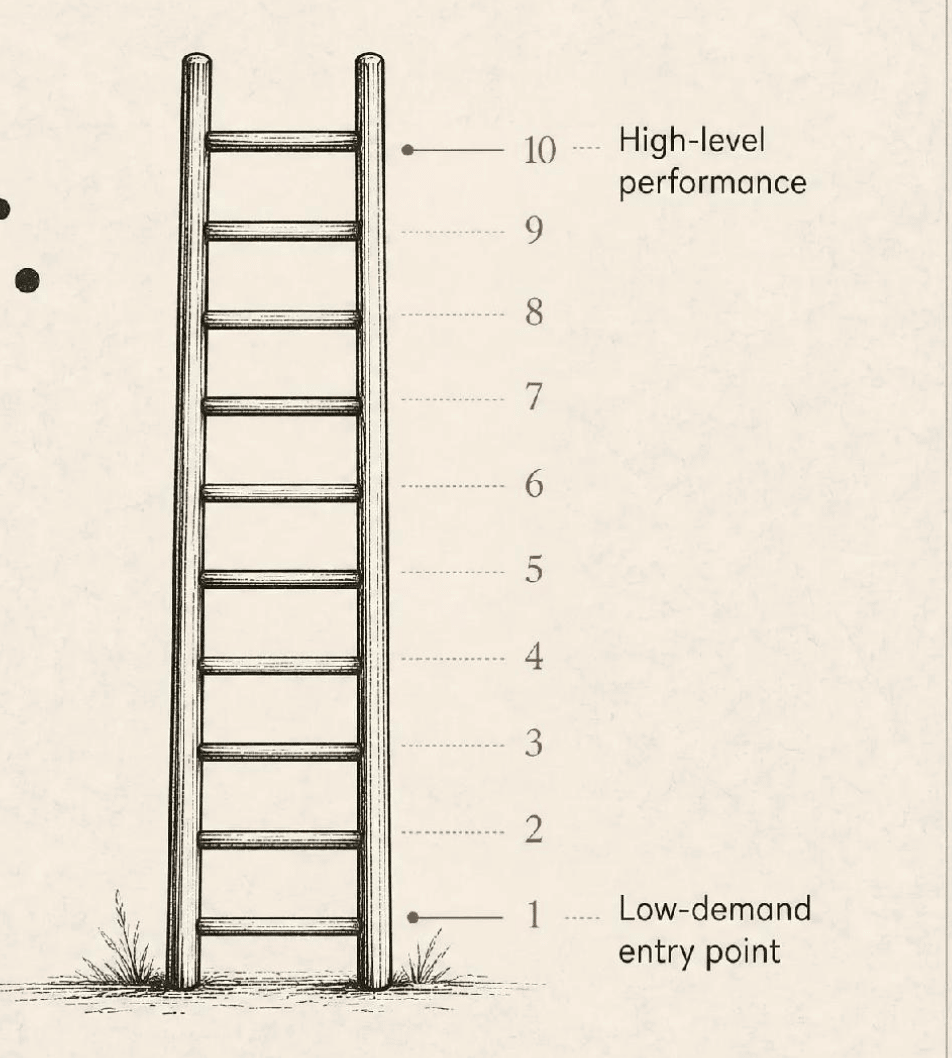
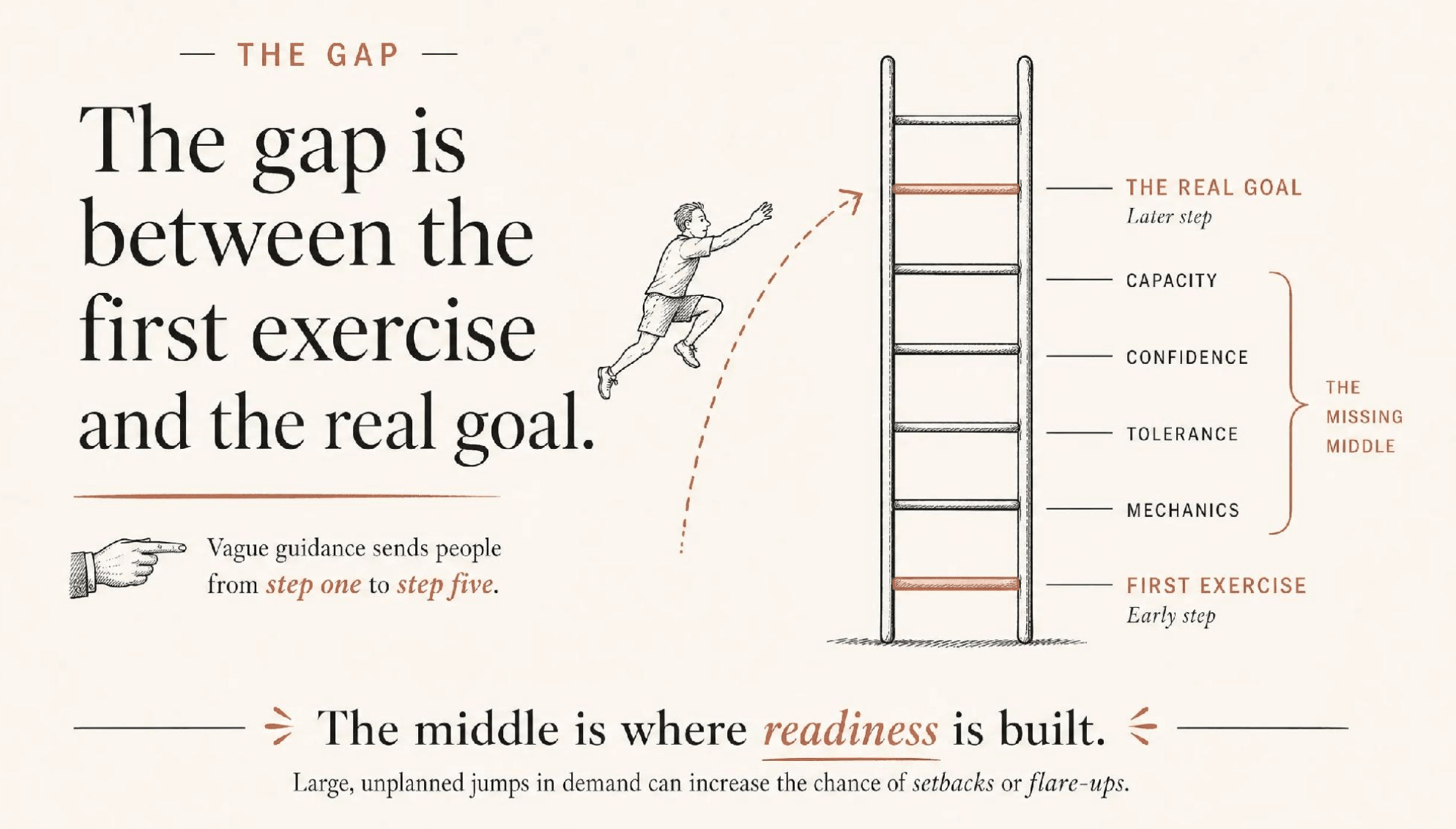
Lets say that each ladder has 10 rungs. Rung 1 is low-level rehab movements like glute bridges, bird dogs, nothing demanding. Rung 10 is high-level strength and capacity like heavy deadlifts and complex athletic movement. Before your injury, you were probably sitting somewhere between a 5 and a 7. Then your back went, and suddenly you feel like you can’t do anything other than boring rehab.
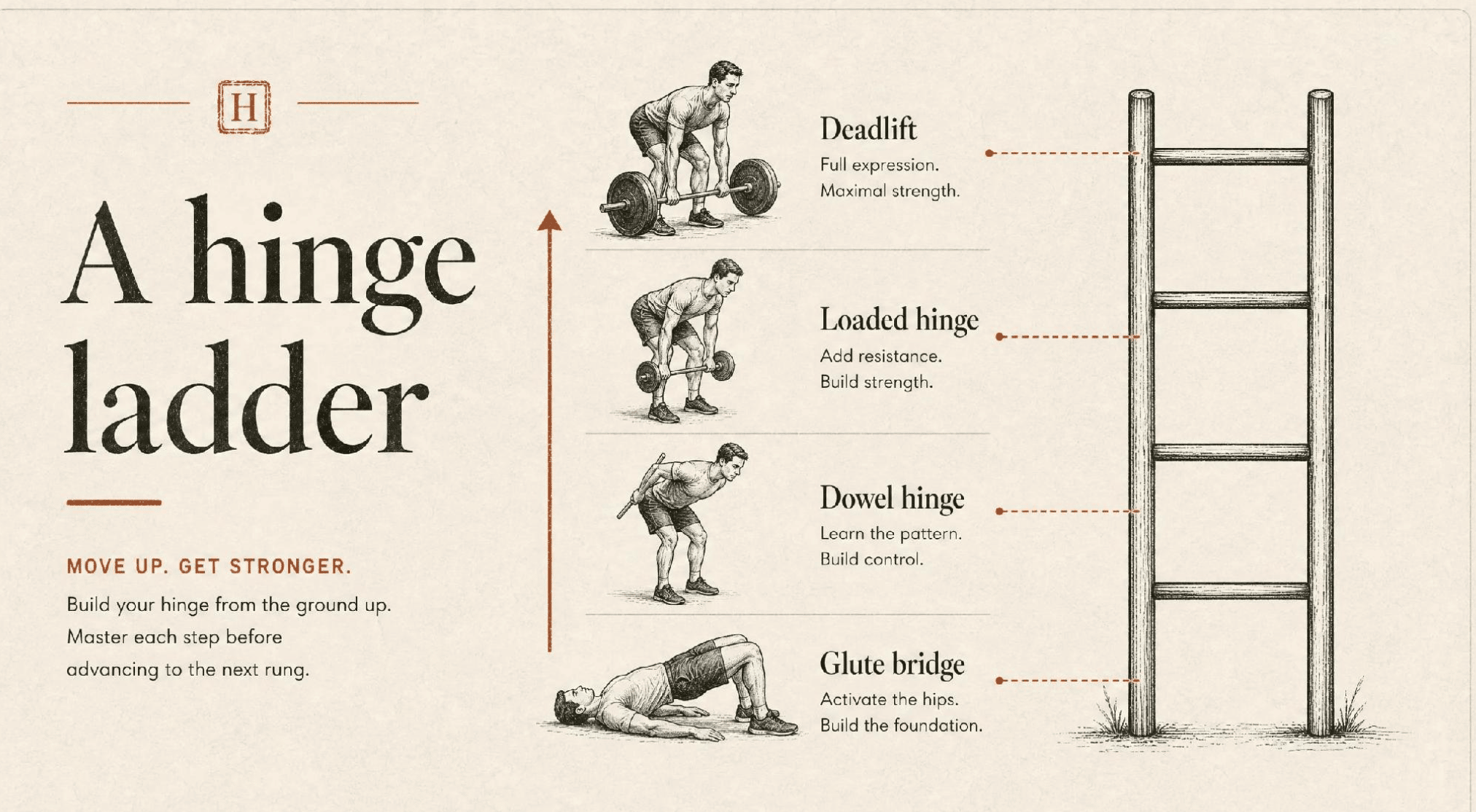
But rehab is just the bottom rungs of the same ladder you were already on. Take the hinge pattern. After a disc injury you probably can’t deadlift, but you can start on glute bridges or dowel hinges and gradually build confidence and tissue tolerance up through the rungs until eventually you’re deadlifting again. It’s the same movement the whole way up, just a different intensity.
The reason this matters is that most gym programs drop you in at rung 5 or 6 from week one. So when your physio says “return to activity,” that’s where you jump back to, skipping everything in between rungs 1-5. And everything in between is where you build the mechanics, the tissue tolerance, and the confidence to actually handle load again. Miss it and your body compensates. That’s where Niall’s flare-ups kept coming from, and that’s probably where yours are coming from too.
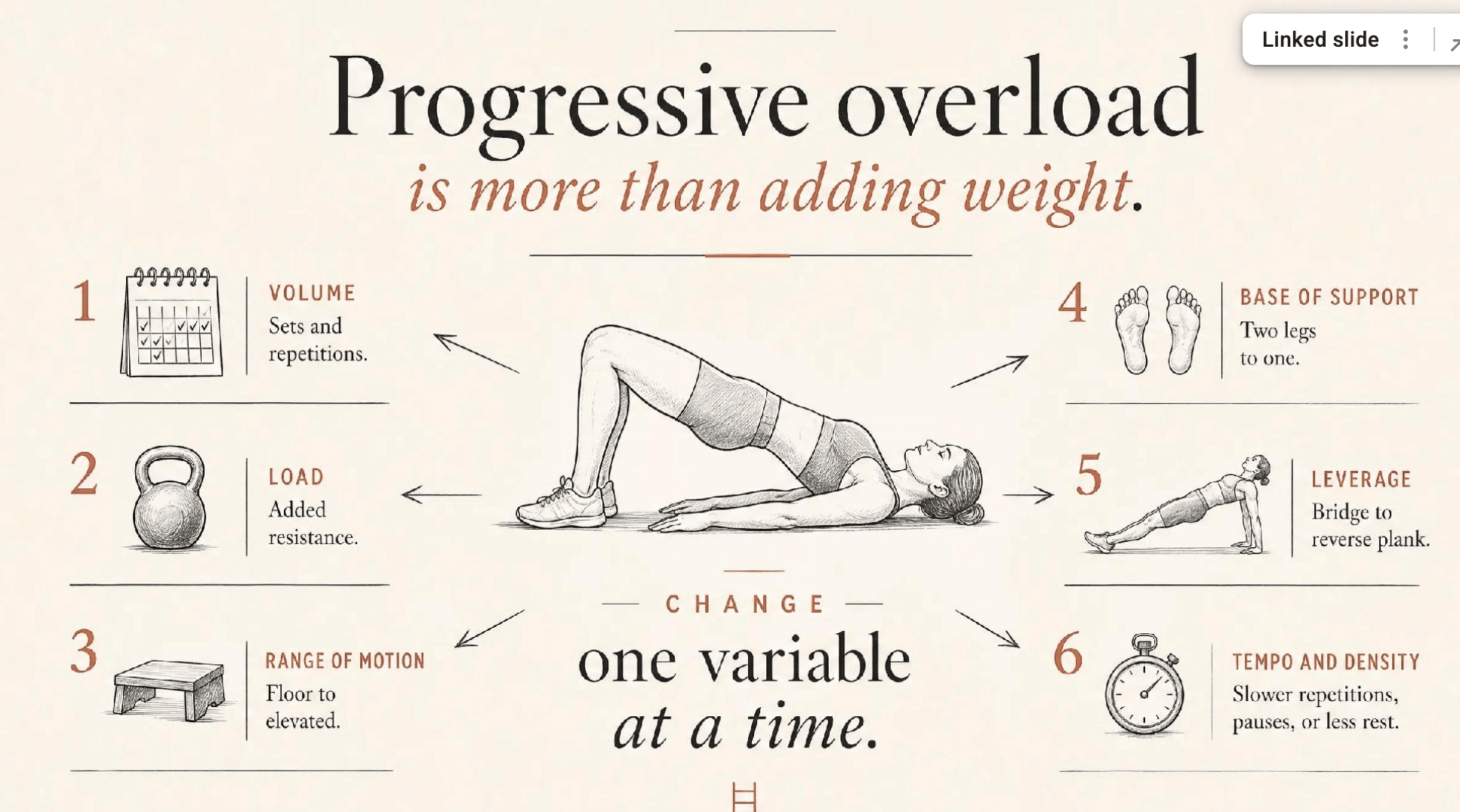
To move between the rungs, we can also use different variables to make a movement harder. There are six dials you can turn on any movement to make it harder or easier: load, range of motion, leverage, base of support, density, and tempo.
Let’s use the glute bridge as an exmaple:
You elevate your shoulders off a bench, that’s range of motion.
You drop from two feet to one foot, that’s base of support.
You slow the rep down to a four-second eccentric, that’s tempo.
Same exercise, but a completely different demand.
When you see your rehab training as one ladder vs a boring rehab plan, it completely shifts your psychology. I find this method gives people a greater sense of control over what they CAN do rather on dwelling on what they can’t. And I’ve made it my lifes work to remove any points of friction that stops people from exercising consistently.
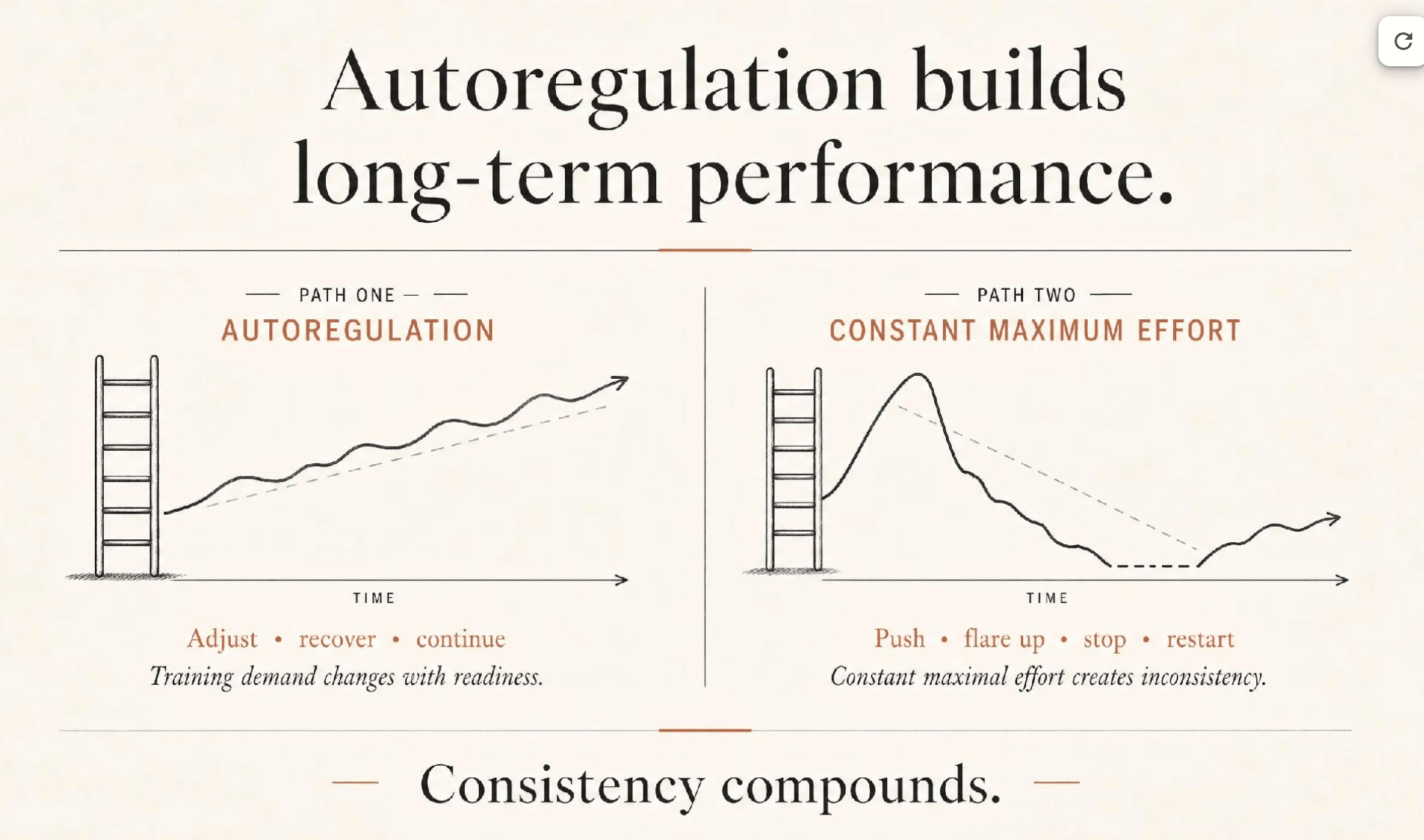
The cool thing about understanding this approach to training is it gives you much more ability to turn into the type of person who can stay consistent and as a result stay strong, resilient and injury free as they age.
How did this article land for you?
Hit reply and let me know what you think of this approach.
Conor
Originally published on Substack.
Get new posts by email.
Published on Substack. No spam, unsubscribe any time.