Article
I spent four years doing everything I was told. Rest, physio, stay away from the gym.
My back kept flaring up anyway.
Every time I started feeling good, I’d get back to training. A few months later I’d be on the floor again, wondering what went wrong.
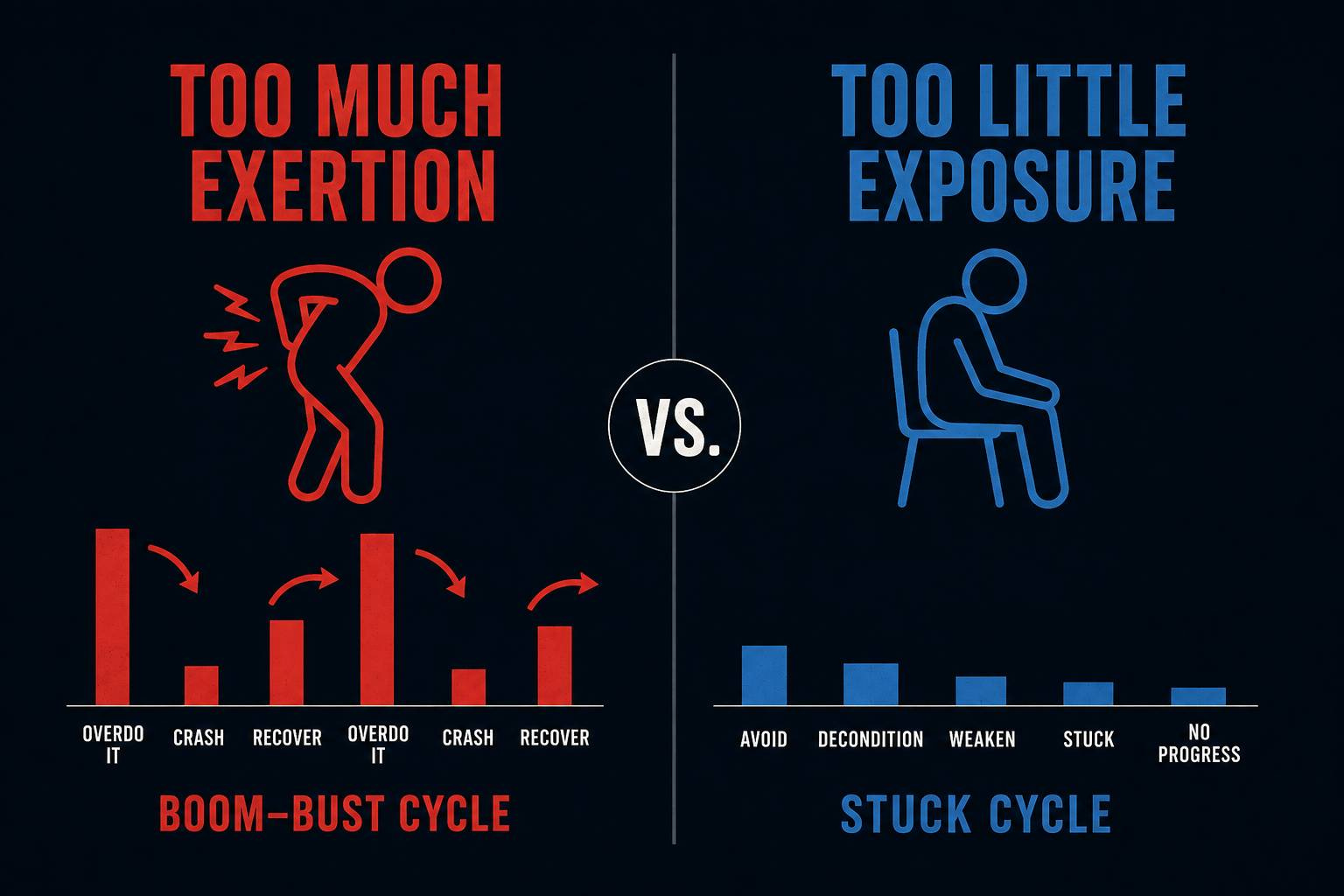
What I didn’t realise until much later is that I was stuck in what I now call the boom-bust cycle.
And here’s the frustrating part: most people stuck in it are genuinely trying to do the right thing. They’re not lazy or reckless. They’re just in one of two buckets without realising it.
I had a client come to me after two years of exactly this. Massive flare-up, rest, physio, feel better, back to training.
Boom. Back to square one. And each flare-up was worse than the last.
Then another client who’d spent nine months in PT doing the same generic program. Planks and dead bugs, over and over. He’d been told anything beyond that would damage his back permanently.
Two completely different situations. Same result: neither of them was getting better.
There are only two reasons people stay stuck in this cycle. Either you push too hard too fast every time you feel good, or you stay so cautious you never build enough capacity to actually rehab your back. Both feel like the sensible approach.
Neither one breaks the cycle.
The way out is the same for both: stop thinking about exercises and start thinking about movement patterns.
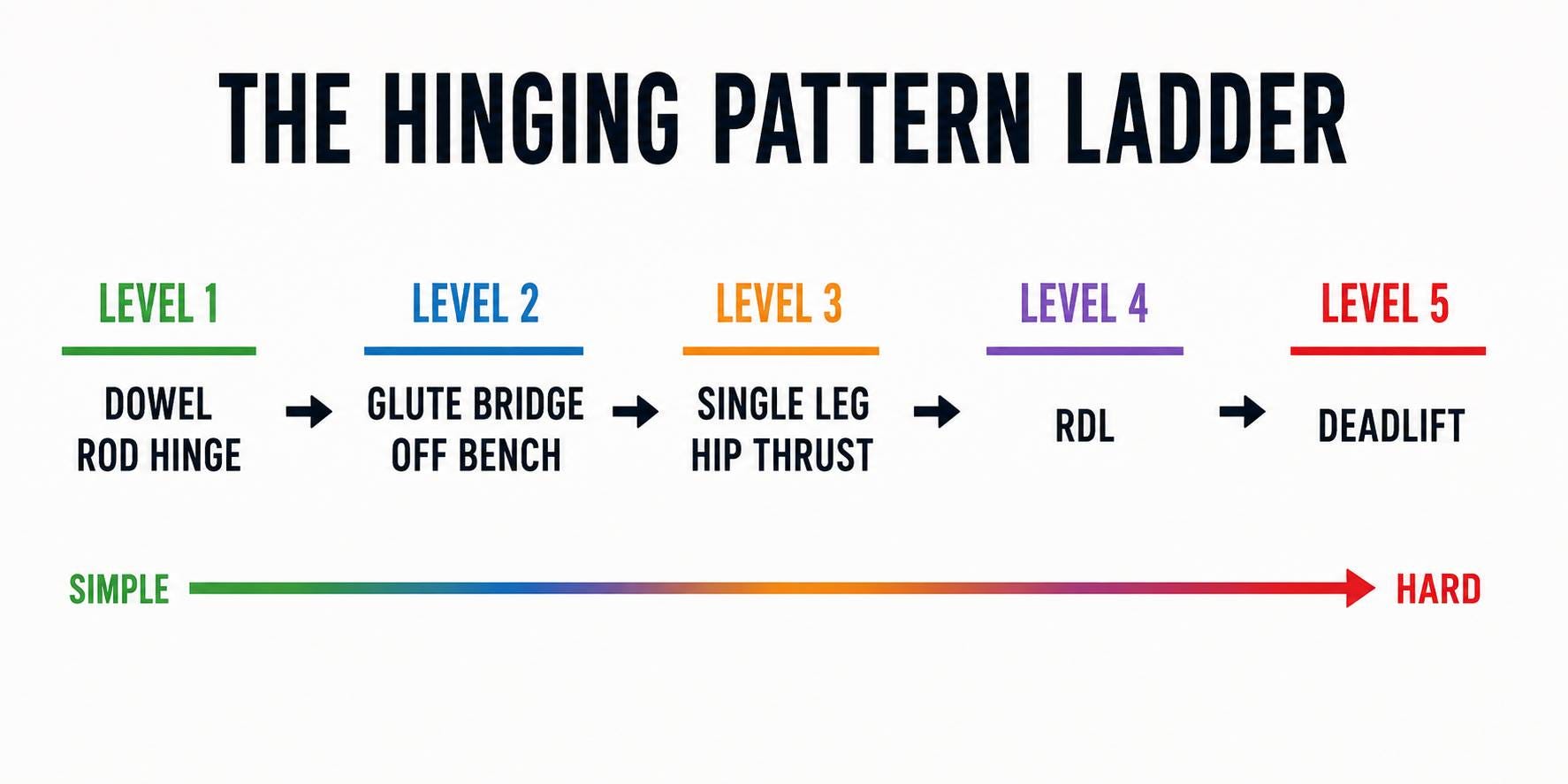
“Can I deadlift?” is a yes or no question, and when you’re in pain the answer is useless. “Where am I on the hinging pattern?” is a different question entirely. There’s always a version of that movement you can do right now, at your current level, that builds capacity without triggering another flare-up.
It’s also why it drives me mad when a client tells me their doctor or physio said to never deadlift again.
That one sentence plants fear which leads to avoidance. And avoidance is one of the worst things for recovery, because the less you do, the less your back can handle.
When you understand movement patterns, the opposite happens. You stop waiting for someone to fix you. You know how to manage your own body and your own symptoms, and you know how to adjust the load, the range of motion, the exercise, the volume, based on what your body can handle right now.
Injury or no injury, that’s the skill that keeps you training for the next 30 years.
Cheers,
Conor
P.S. If you’ve been through the boom-bust cycle more times than you can count and you want someone to work out which bucket you’re in with you, that’s exactly what I do on a call. Book one here:
Originally published on Substack.
Get new posts by email.
Published on Substack. No spam, unsubscribe any time.