Article
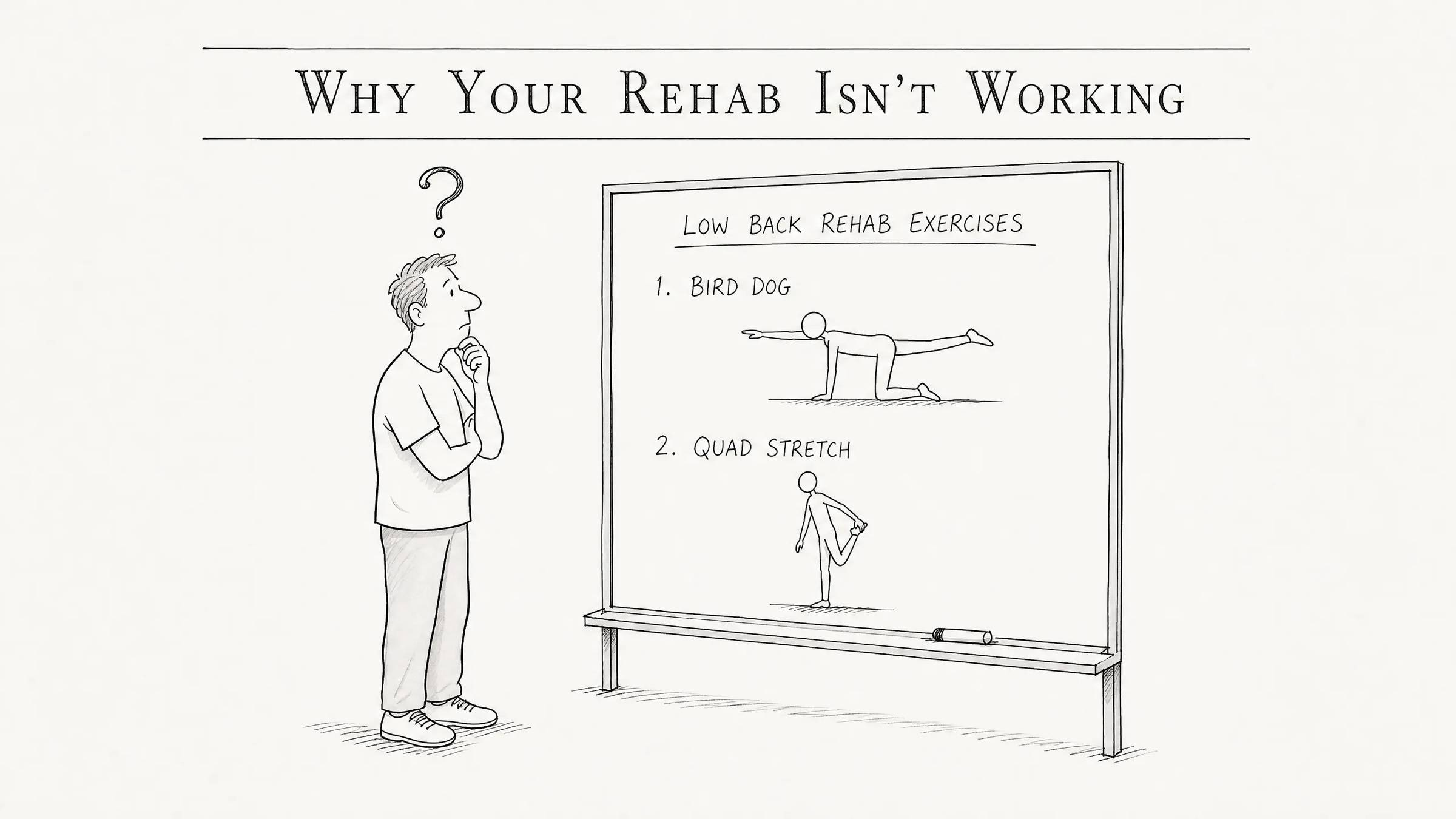
In the last six months I’ve done over 100 calls with people stuck in the same loop. A disc flare-up, a few weeks of rehab, things settle, they get back into life, and then it goes again.
Most of them assume they’re doing the wrong exercises but almost none of them are.
What I keep finding is that nobody has ever looked at their total weekly load: how much they’re training, how much they’re sleeping, how stressed they are, and everything else that’s aggravating their back outside the rehab room.
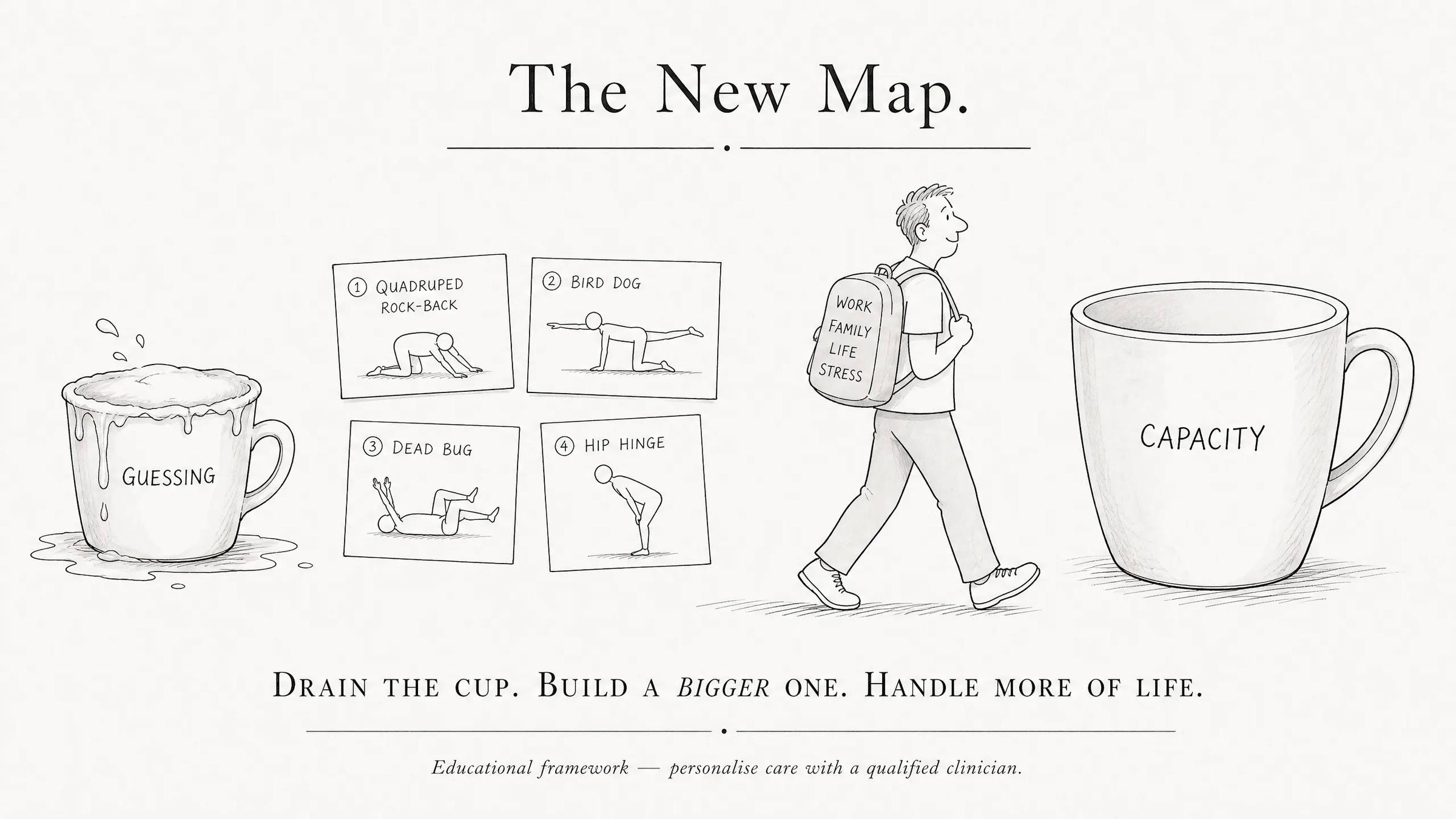
Picture a cup. That cup is your back’s capacity, everything it can handle before something gives.
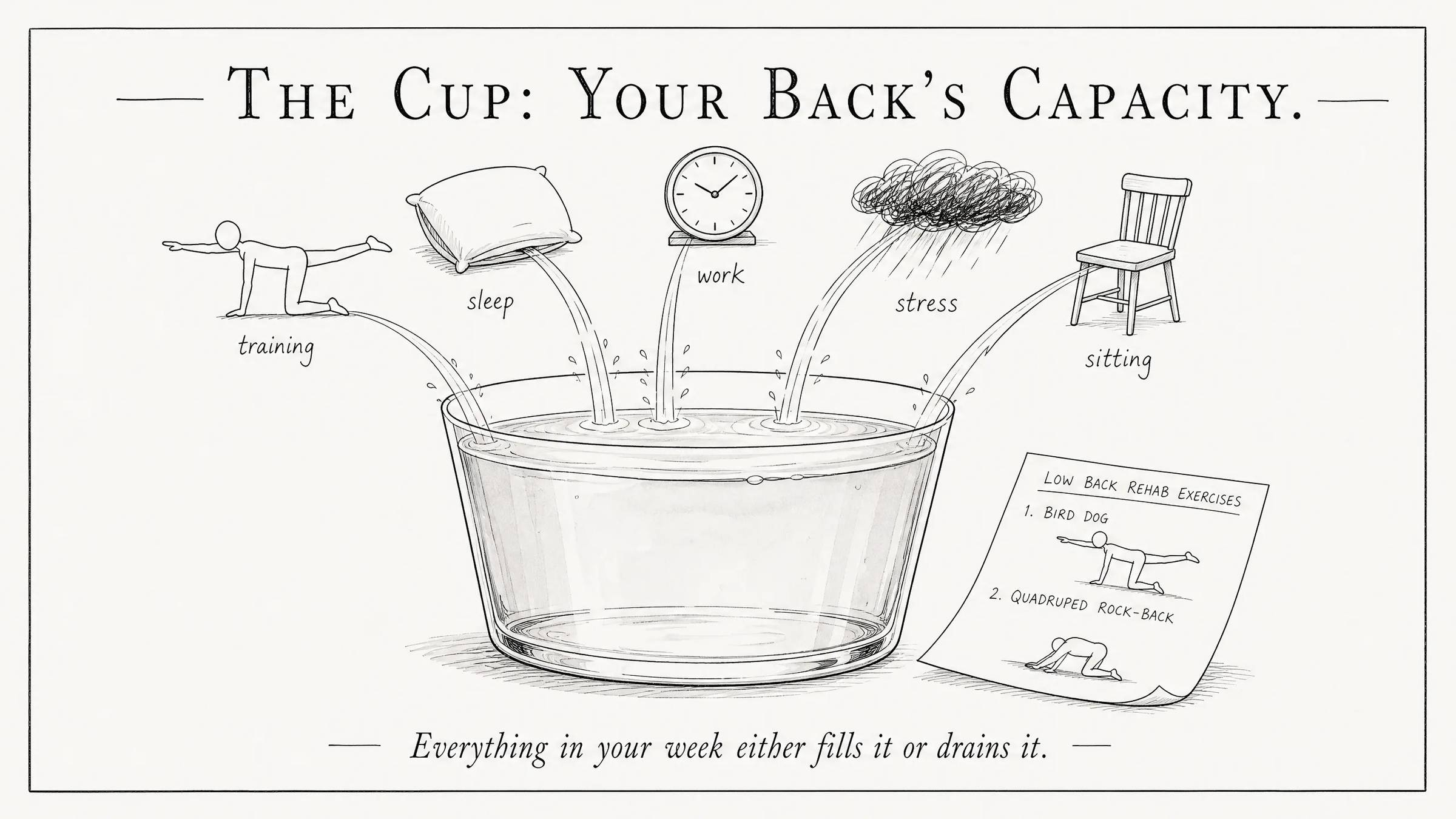
Everything in your week either fills it or drains it.
Your training, your sleep, your stress, how long you’re sitting, how busy you are at work, a difficult relationship or a family issue.
Your beliefs about your back, how you feel about yourself, and what goes through your head the moment you feel a sensation all pour in too.
When a flare-up happens, most people go looking for the one movement that caused it. The deadlift, the run, the moment they bent down to pick something up.
But that movement wasn’t the cause, it was the last drop that overflowed the cup.
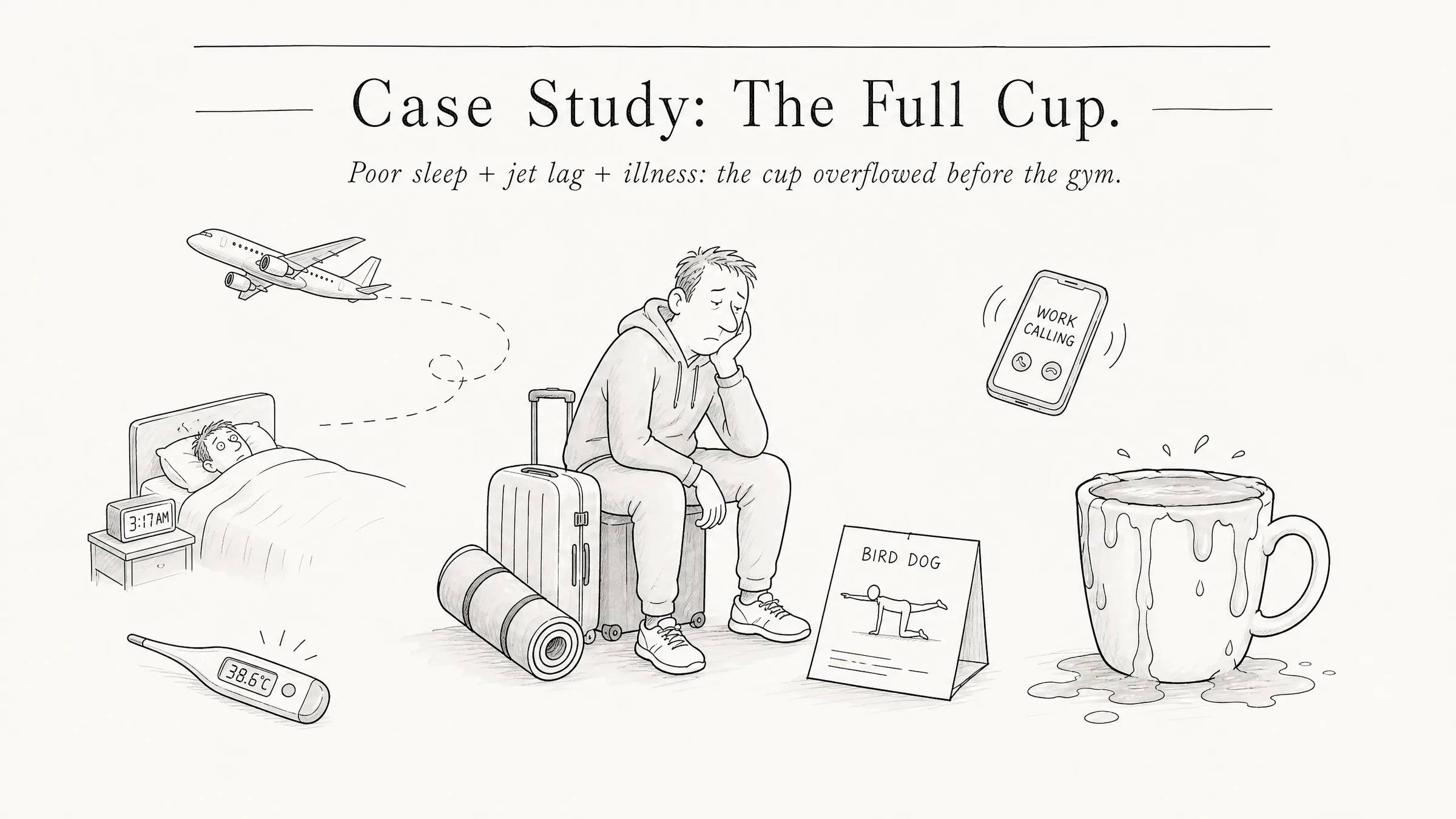
Here’s a personal example. I had a last-minute business trip to Bali recently. Not complaining, it’s a great place, but it was intense. I slept badly, had jet lag with no time to adjust, and got sick while I was there. On the way home my symptoms started creeping up, and that same week I aggravated my old ankle injury. My cup was overflowing before I’d done a single thing in the gym.
This is why two people can do the exact same session and only one of them flares up. It’s not the session, it’s how full their cup already was when they walked in.
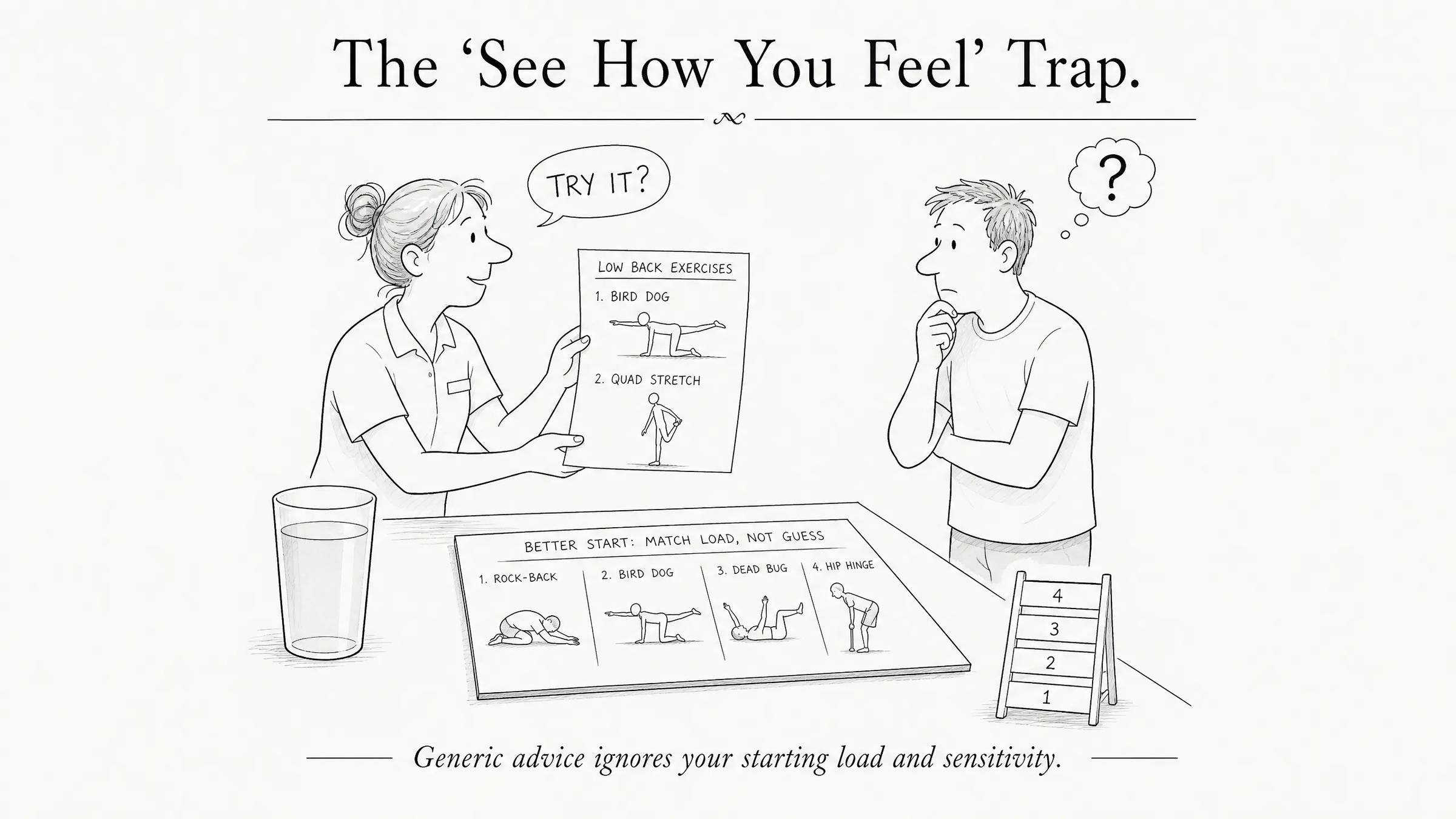
This is where a lot of rehab advice falls short. It focuses on the exercises and ignores every other part of your life.
The most common version is advice you’ve probably had from a well-meaning physio. You ask what you can do outside your rehab exercises and you’re told to go back to what you were doing before, just do a bit less, and see how it goes.
Go for a run and see how it feels. Go back to tennis and see how it feels. If it’s okay, keep going. That advice isn’t malicious, but it ignores your cup, and it doesn’t account for how different a disc injury is.
It makes sense if you’ve had a cold and you’re asking whether you’re ready to train again. It doesn’t account for the sensitivity a disc injury builds up, the nerve irritation and the fear, or the need to gradually expose your back to load rather than jumping straight back in.
One of my clients is a high-level runner, half marathons were part of her morning routine. When a disc injury forced her to stop, her physio told her to try a run and see how it felt.
She did a 5K, because cardiovascularly that was easy for her, and she still flared up. The problem wasn’t her effort or her fitness. The advice just wasn’t specific enough for where she was in her recovery.
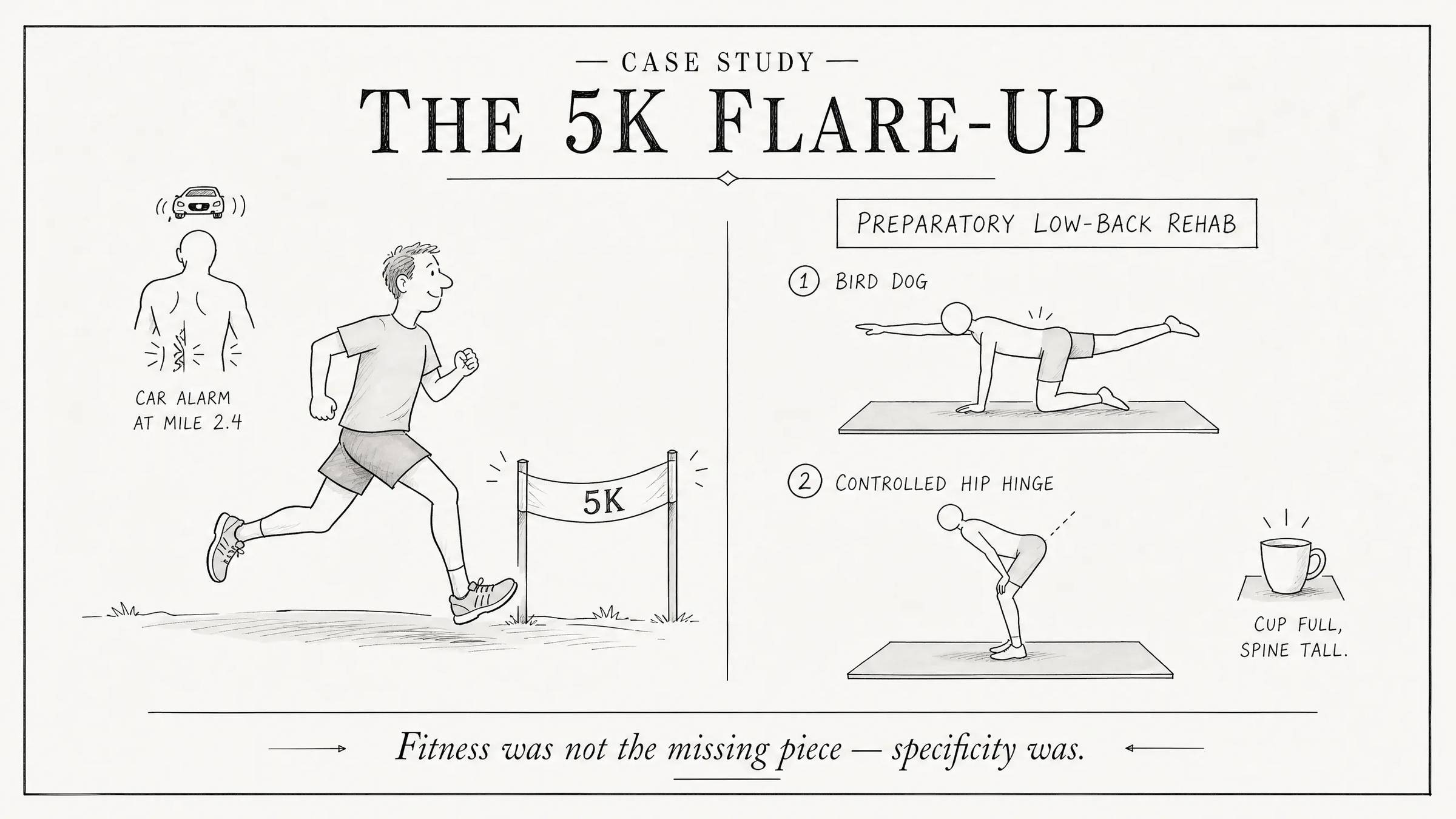
Here’s how we actually rebuild people for back pain.
The system: desensitise, build capacity, thrive
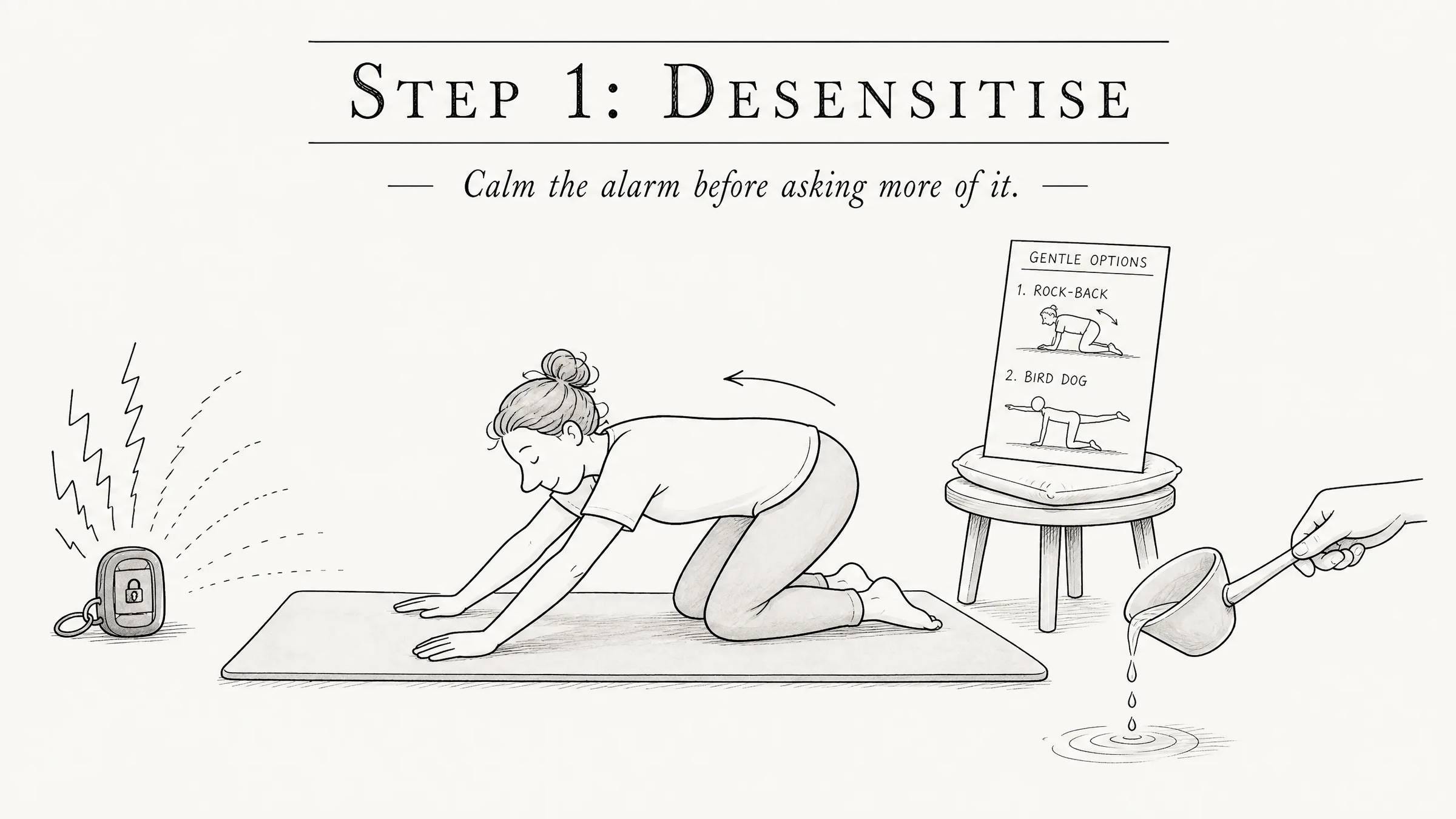
1.Desensitise. When you’ve been in a flare-up cycle for a long time, your system becomes hypersensitive, like a car alarm that goes off when a leaf lands on the bonnet. That’s what’s happening when sciatica keeps flaring from what feels like nothing, or small movements that should be fine keep setting you off. The goal here isn’t to push through. It’s to calm the alarm down first.
Sarah is a good example. She was hip thrusting 100kg in the gym but couldn’t hold her daughter for more than five minutes without her back giving out. When we looked at her whole week, she was sleeping five hours a night. Once we worked on her load, her lifestyle and her tolerance, the alarm settled and she was ready to build.
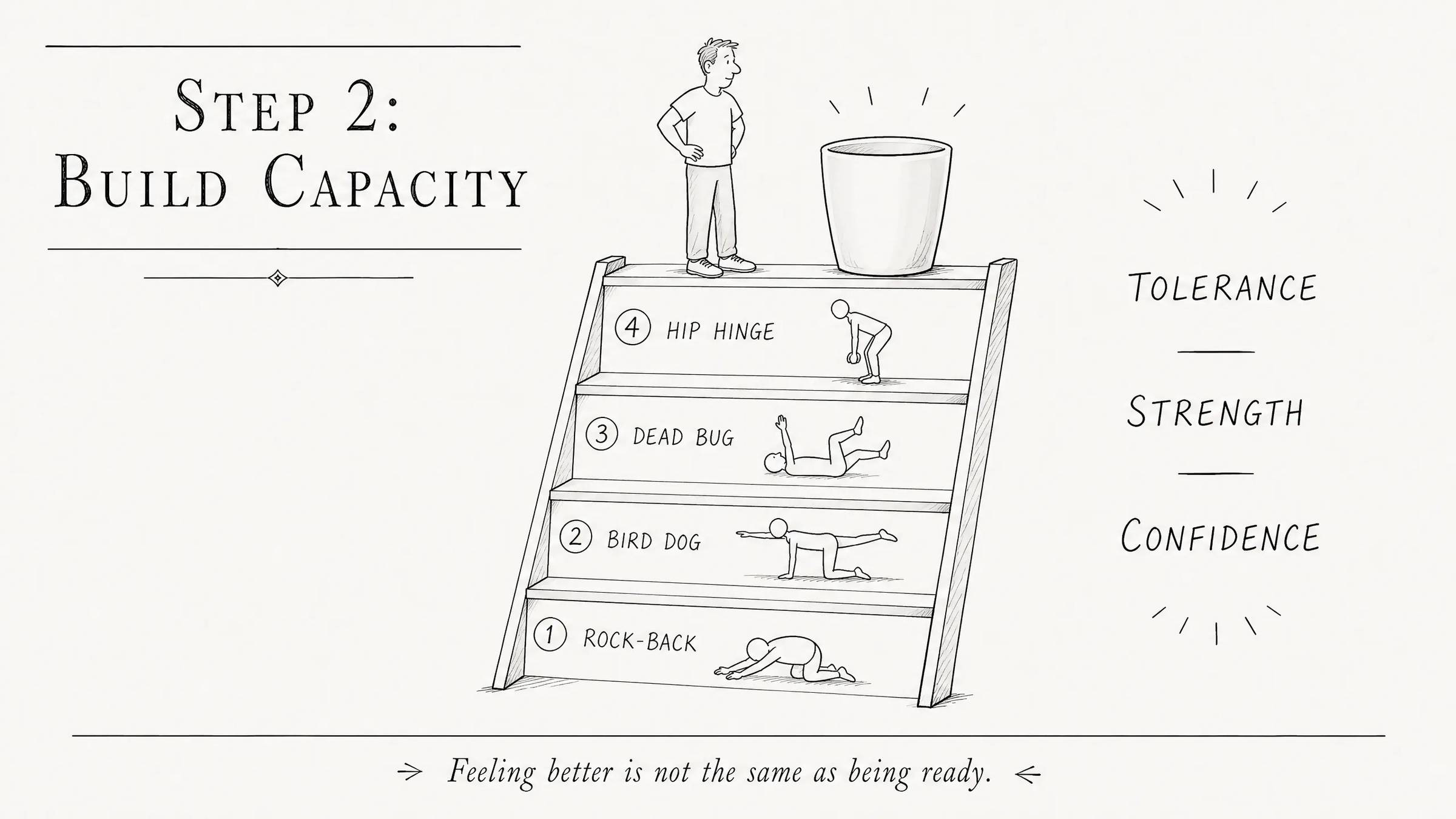
2. Build capacity. This is the step most people skip. You feel better, you jump back in, you flare up again, and every time that happens it chips away at your confidence until you start wondering if something is permanently broken. It isn’t, you just haven’t built the tolerance yet.
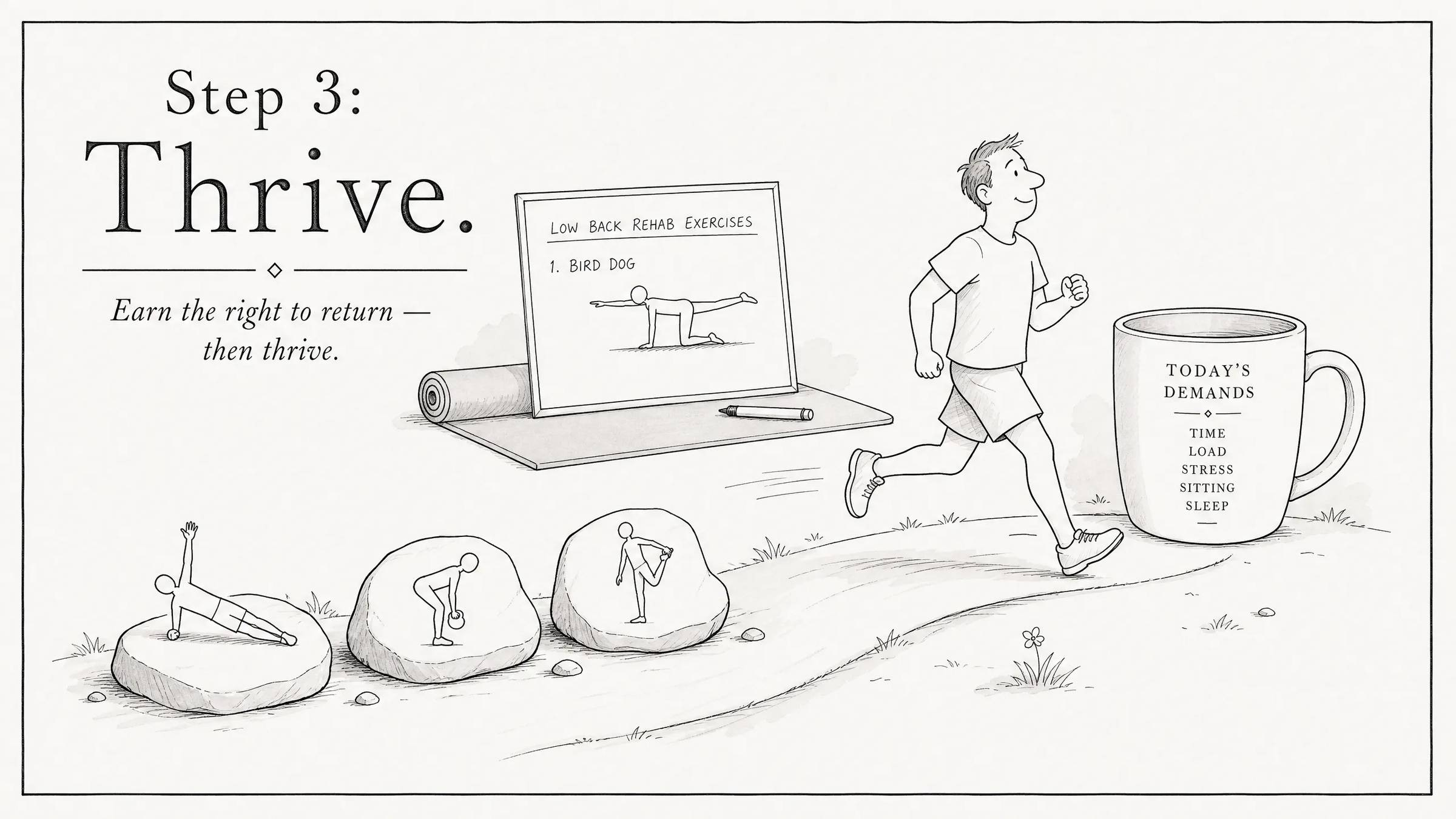
3. Thrive. Eduardo had back surgery and wanted to get back to running. Instead of trying a run and seeing how it felt, we got him to earn the right to run by building his plyometric work and single-leg strength first. When he went back he had no negative symptoms, and his running actually improved because his legs felt stronger than they were before. That’s the difference between guessing and having a map.
What I want you to take from this In my experience, it’s rarely the scary MRI findings that are the real problem, and a lot of the time that language alone creates a huge amount of fear that makes everything worse.
In the majority of cases I see, it’s a capacity problem. Once you manage your load properly, address what’s actually missing (strength, mobility, lifestyle, or the thoughts you have around your injury) and do the right things slowly, with the nuance this deserves, these issues improve dramatically.
Drain the cup first. Then build a bigger, more robust one, so you can handle the demands of your life without these symptoms coming back.
And if you’re still in the cycle, reply and tell me what your week actually looks like. Not your rehab plan, your week. - Conor
P.S. If you want help to rehab your back properly, book an assessment call with me here and I’ll see if we can help you finally fix your back pain.
Originally published on Substack.
Get new posts by email.
Published on Substack. No spam, unsubscribe any time.